
History & Tradition
- Traditionally, korkot was prepared in large clay pots and cooked over low heat, sometimes overnight in a tonir. It was especially suitable for winter and for occasions when one substantial dish was needed to feed a large family or gathering.
How It’s Served
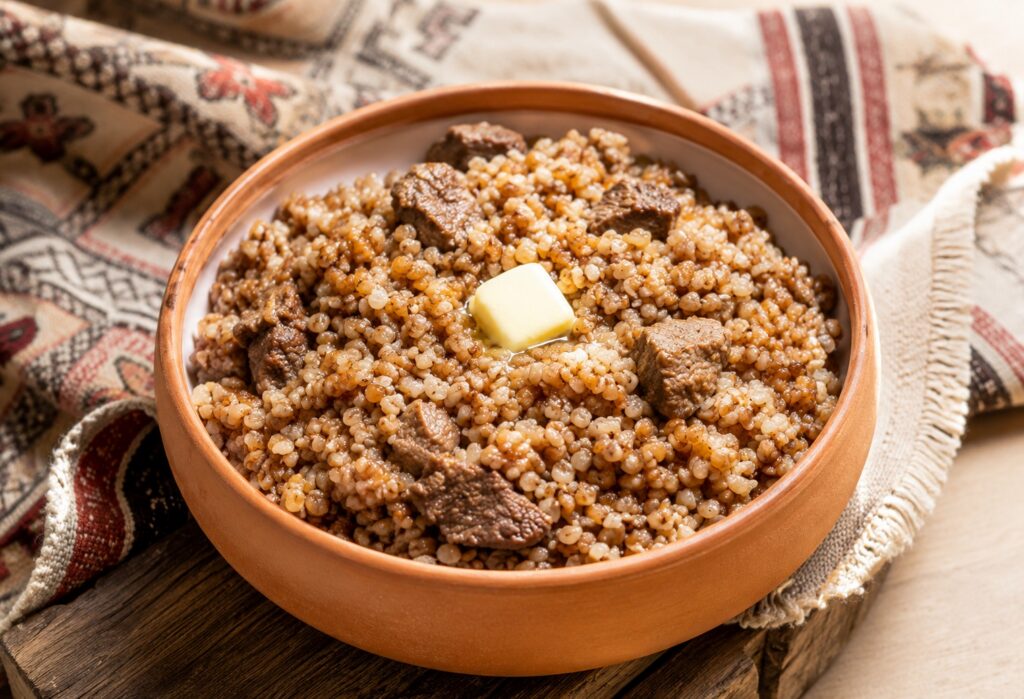
- Korkot is served very hot in a deep plate or clay bowl. Melted butter and black or red pepper may be added on top. Because of its thick and filling texture, it is usually served as a main course with pickled vegetables, fresh herbs or bread.
Cultural Significance
Korkot reflects the slow-cooking tradition of Armenian rural cuisine, in which a few basic ingredients were transformed into a nourishing meal. Dishes of this kind were particularly valuable during Lori’s long, cold winters. In Vanadzor, korkot is regarded as part of the wider culinary heritage of the Lori region.
Did You Know?
- The word “korkot” refers not only to the finished dish but also to its main ingredient—hulled and crushed wheat or barley. For this reason, recipes and preparation methods may differ across Armenia’s regions.